



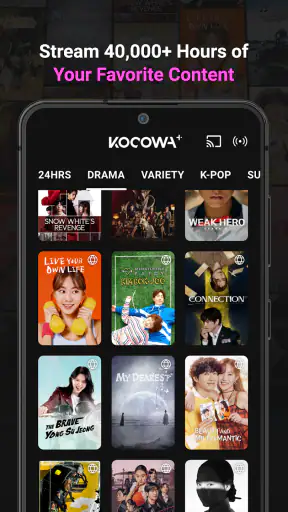
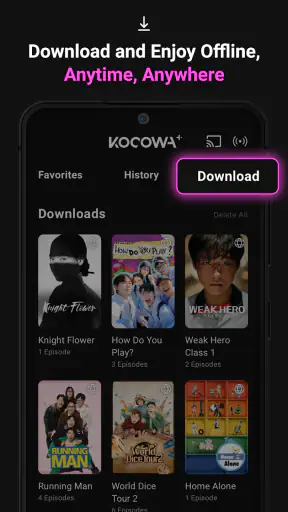
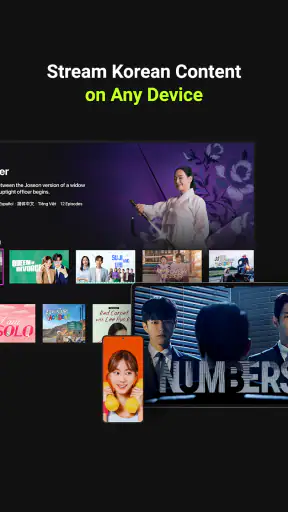

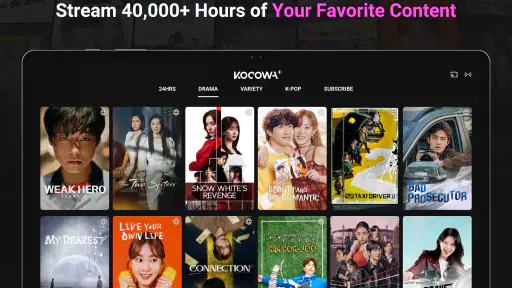
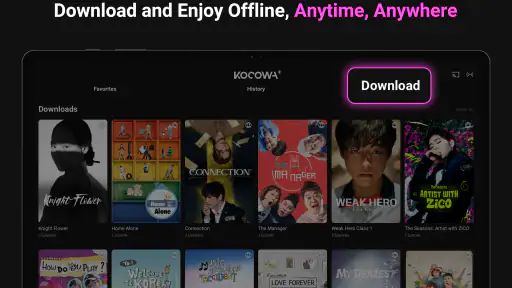
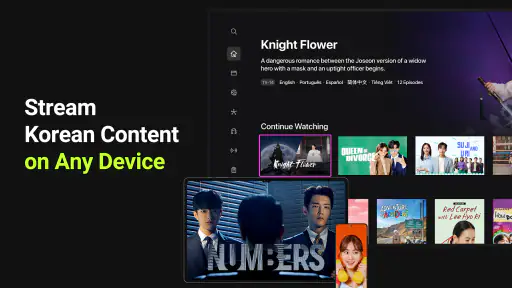
I installed KOCOWA+ to see whether it could become a regular part of my entertainment routine rather than just another streaming app I open once for a popular show. It is a free entertainment app from wavve Americas, Inc., focused on Korean dramas, pop culture, and television. The first impression is easy to understand: if your watchlist already leans toward Korean content, this is a more focused destination than a broad streaming service that treats Korean programming as one small corner of its catalog.
That focus is also the central question. A specialist app can feel wonderfully convenient during the first week, especially when I know exactly what I want to watch. The harder test comes later, when the initial curiosity has faded and I need a reason to keep returning. In my experience, KOCOWA+ has real staying power for dedicated Korean entertainment viewers, but it is less convincing as a general-purpose replacement for every other streaming service.
What the first week feels like
My first week with the app was driven by discovery. Instead of browsing through unrelated genres, I could stay inside a Korean entertainment environment and move between dramas, television programs, and K-pop-related viewing. That narrower identity made choosing something less tiring when I already knew the kind of mood I wanted. I did not have to search a general catalog and wonder whether a title was buried somewhere among thousands of unrelated options.
This is where the app’s store summary, “The ultimate destination for Korean Entertainment,” makes practical sense without needing to be treated as a promise about every viewer. For someone who follows Korean series or wants a dedicated place for that interest, the app feels more purposeful than a generic video platform. For someone who watches only occasionally, the specialization may instead make the catalog feel limited once the obvious choices have been explored.
I also liked the way a focused service can support a viewing habit. When I had a short break, I could open the app with a clearer idea of what I was there to do: continue a drama, look for a television program, or browse Korean pop-related material. That is a small advantage, but it matters. The best entertainment apps reduce the time between opening the screen and actually watching something.
Still, I would not install it expecting the same breadth as a large general streaming subscription. KOCOWA+ is best understood as a specialist companion. If your household wants Hollywood films, children’s programming, sports, documentaries, and Korean dramas from one place, a broader service will probably remain necessary. If Korean entertainment is the part of your viewing life you return to most often, the narrower catalog becomes a benefit rather than a drawback.
Who gets the quickest benefit
The strongest early use case is a viewer who already has a few Korean shows in mind. That person can make the app useful immediately instead of waiting for the recommendation system to teach them what they like. It also suits viewers who want one dedicated destination for Korean television rather than scattering their watchlist across several mainstream services.
I see another practical use case for people who share recommendations with friends. When a conversation turns to a Korean drama or entertainment program, a focused app is easier to revisit than a general platform where the title may be mixed with unrelated suggestions. The app can become the place I check first when I want to follow that particular part of my interests.
It is less suitable for a viewer who needs a constant stream of unrelated novelty. If your ideal evening involves moving from a crime film to a nature documentary and then to a sitcom, the specialization may feel restrictive. The free installation lowers the barrier to trying it, but the long-term decision depends on whether the content focus matches your actual routine.
Small habits that improve the experience
I found it useful to decide what kind of session I wanted before opening the app. A planned “one episode” visit works differently from an exploratory visit, and the focused catalog is more enjoyable when I am not expecting it to solve every entertainment need at once. I would also keep a simple personal watchlist outside the app if I follow several shows across services, because relying on memory becomes inconvenient once viewing is split between platforms.
Another useful habit is to treat the app as a destination for intentional viewing rather than background noise. Korean dramas often reward attention to dialogue, relationships, and pacing. Opening the app when I have enough time to watch properly gives it more value than launching it repeatedly during tiny gaps and leaving without starting anything.
Why it can still matter after the novelty
The month-to-month value depends on repetition, not on the excitement of installing a new app. I would keep KOCOWA+ installed if Korean programs appear regularly in my viewing plans. In that situation, the app’s identity remains useful because it gives one interest its own home. The value is not simply “more videos”; it is less searching and less friction for a specific kind of content.
The average rating of 4.5 from around 9,400 ratings suggests that many users find the overall experience satisfying, while more than a million installs show that the service has reached a substantial audience. Those figures do not decide whether it belongs on my phone, but they do make it easier to see the app as an established viewing option rather than an experiment with no audience behind it.
For recurring value, I would judge it by three questions. Do I have unfinished Korean shows I genuinely want to continue? Do new additions or discoveries give me a reason to return after finishing one series? And does the app fit alongside my existing subscriptions without becoming an unnecessary duplicate? If the answer is yes to the first two, the specialist approach earns its space. If the answer is no, the app may become something I remember fondly but rarely open.
One advantage of a dedicated service is that it can help preserve a particular interest. On a broad platform, recommendations are often pulled in many directions by viewing history. With KOCOWA+, my attention stays closer to Korean entertainment, which is helpful when I want to deepen that interest instead of constantly being redirected toward whatever is most prominent elsewhere.
That same focus creates a trade-off. A general streaming service may offer better value for a mixed household because several people can find something different in the same subscription. KOCOWA+ makes more sense when at least one regular viewer will use the Korean-focused catalog consistently. I would not choose it solely because it is free to install; I would choose it because the viewing pattern is specific enough to justify a dedicated app.
How it compares with usual alternatives
Compared with a broad streaming platform, KOCOWA+ feels more like a specialist shelf than a complete entertainment library. The benefit is concentration: Korean dramas, K-pop-related viewing, and television programming are the reason to open it. The compromise is that I may still need another service for everything outside that lane.
Compared with general video platforms, the app offers a more deliberate viewing context. Search and recommendations are not competing as heavily with unrelated clips, creators, and viral material. That can make it easier to settle into a full episode rather than drift into short-form browsing. On the other hand, general platforms can be more convenient when I want quick, informal viewing or a wider mix of user-created material.
Compared with relying on television schedules or scattered sources, a dedicated app is more practical for a viewer who wants control over when to watch. I can build my routine around my own time instead of waiting for a program to appear. The important limitation is that the benefit is strongest only when the app’s available selection matches what I want at that moment.
The maintenance cost of keeping it around
Maintenance is not just technical upkeep; it is also subscription discipline, attention, and storage. The app is free to download, but in-app purchases range from $6.99 to $89.99 per item. That makes it important to understand my own viewing pattern before paying for access. I would avoid treating a single enthusiastic week as proof that a longer commitment is worthwhile.
My practical approach would be to install it, identify several programs I truly intend to watch, and then observe whether I return consistently after the first one. If I only open the app when a friend mentions a title, paying for continued access may not make sense. If it becomes part of my weekly routine, the cost can be easier to evaluate because I am measuring actual use rather than imagined future use.
The app is intended for teens, so families should still think about whether its entertainment focus fits the age and habits of each viewer. An age label is useful guidance, but it is not a substitute for a parent checking what a younger person plans to watch. I would also keep normal account and purchase awareness in place, especially on a shared device.
On the device side, KOCOWA+ supports Android 8.0 and later. That is helpful for people using older compatible phones, though anyone with a very old device should still judge the experience by everyday responsiveness, available storage, and the quality of their connection. Streaming apps are rarely pleasant when the phone is already struggling with basic tasks, regardless of the app’s catalog.
The current version is 4.1.3, and I would keep automatic updates enabled where possible. Updates are part of the maintenance burden, but they are also how a streaming app remains usable as operating systems and playback environments change. I would rather spend a moment updating a service I actually use than keep an outdated installation and blame the app for problems caused by neglect.
Where friction can build over time
The first source of fatigue is catalog dependence. If my favorite current show ends and nothing else immediately interests me, the app can lose its place in my routine. This is not a flaw unique to KOCOWA+, but it matters more for a focused service because the range of alternatives inside the same app is intentionally narrower than on a general platform.
The second is subscription overlap. Many viewers already pay for one or more streaming services, and adding another app creates more decisions: which service has a title, which account is active, and which payment should be paused. KOCOWA+ earns lasting space only when its Korean-focused selection is distinct enough from those alternatives to justify the extra mental and financial management.
The third is attention fatigue. A specialist catalog can be refreshing at first, but browsing the same categories repeatedly may eventually feel predictable. I would counter that by alternating between a planned drama and a different type of Korean program instead of consuming one narrow format continuously. That makes the app feel like a broader cultural destination within its specialty, rather than a single-show container.
There is also a difference between wanting Korean entertainment and wanting language study. I would not choose the app solely as a formal learning tool. Watching Korean programs can support listening familiarity and cultural interest, but the app’s main purpose is entertainment. Someone seeking structured lessons, exercises, or language feedback would be better served by an education-focused application.
What I would check before committing
Before paying for anything, I would make a short list of the shows and program types that matter most to me, then see whether they are enough to support repeated viewing. I would also decide whether I need the app on my personal phone, a shared household device, or both. That simple decision helps avoid installing it everywhere when one well-maintained device would do.
I would not judge the service after watching only the most attractive title. A better test is to try three different viewing situations: a planned drama session, a quick browse when I do not know what I want, and a return visit after a few days away. The first tests immediate appeal; the last one reveals whether the app has genuine habit value.
If I mainly watch with a partner or family, I would discuss whether the Korean-focused catalog is broad enough for everyone. A specialist service can be excellent for one committed viewer and frustrating for another person who expects a general library. That household conversation is more useful than assuming a high average rating will translate into the same experience for every viewer.
I would also keep expectations realistic about free access and paid items. The installation costs nothing, which makes trying the app straightforward, but the presence of in-app purchases means I would review the available options carefully before starting a payment. The right choice depends on how often I watch, how long I expect to stay, and whether another service already covers the same shows.
My long-term verdict
After the novelty fades, KOCOWA+ remains worthwhile for a clearly defined audience: people who regularly watch Korean dramas, television, and K-pop-related entertainment and want a dedicated place for that interest. Its strongest quality is not that it tries to replace every entertainment app. It is that it gives Korean-focused viewing a more direct route from intention to episode.
I would recommend keeping it installed if opening the app feels like a natural weekly habit. I would be more cautious if I am only curious about one title, already overwhelmed by subscriptions, or looking for a broad family service. In those cases, the app may be useful temporarily but unlikely to earn permanent space.
The developer, wavve Americas, Inc., has positioned this as an entertainment destination rather than a general utility, and that distinction matters. I found the focused approach more valuable when I used it deliberately, with a watchlist and a realistic idea of what I wanted from the service. It became less compelling when I expected endless variety outside Korean programming.
My final recommendation is simple: try it because your viewing habits point toward it, not because every streaming app deserves a place on your phone. The lasting value comes from consistent interest, not installation alone. For the right viewer, that consistency can make the app a dependable part of a monthly routine. For everyone else, a broader alternative may offer better overall value with less subscription and catalog management.


